Monday, February 19, 2024

Equity and Equality in the Zambian WASH Sector

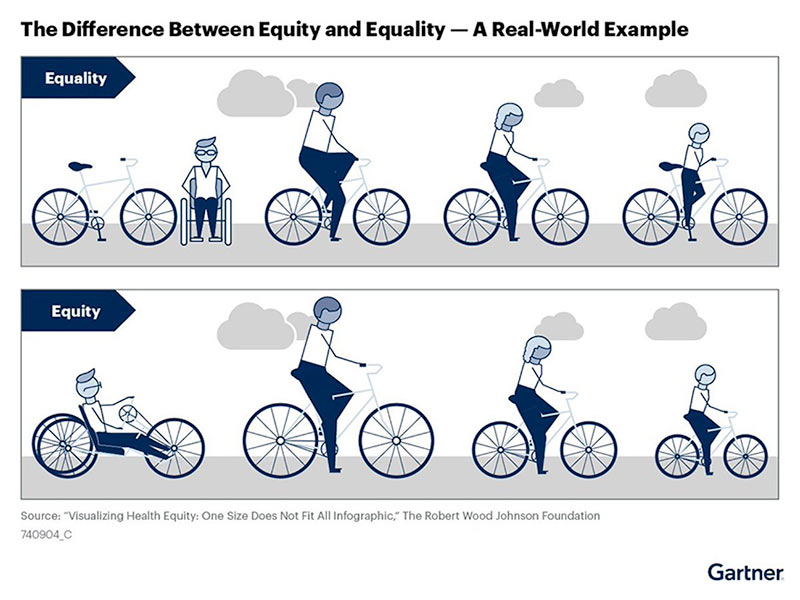
 The Zambian Water, Sanitation, and Hygiene (WASH) sector is a fundamental component of sustainable development, public health, and poverty reduction efforts. Equity and equality within this sector are critical for ensuring that all Zambians have access to clean water, adequate sanitation facilities, and hygiene education regardless of their socioeconomic status, location, or other demographics. While these terms may sound similar, the implementation of one versus the other can lead to dramatically different outcomes for marginalized people.

Equity in the Zambian WASH sector pertains to fairness and justice in the distribution of resources and services. It recognizes that different communities and individuals have varying needs and capacities and aims to address disparities by prioritizing those who are marginalized or disadvantaged. Equity is frequently linked with inclusion. Inclusion means the process of including these marginalized and unserved communities within, and not separate from, society. For WASH, it means considering their needs at all stages of WASH programmes, from planning to evaluation. Equity and inclusion are important cross-cutting issues in WASH because these groups of people have frequently been neglected in the past.

Older people and others who need support rails to hold onto, people with poor sight, and disabled children are just a few of these groups with very specific needs. It is important that stakeholders with responsibility for planning and implementation recognise these varying needs and ensure that individual groups are not overlooked.

In contrast, equality focuses on ensuring that everyone, irrespective of their background, has equal access to WASH services and opportunities. The disproportionate responsibility women and girls bear as primary users, providers, and managers of water, sanitation, and hygiene (WASH) at the household level is yet to be matched by a commensurate representation in WASH-related decision-making. While women’s participation in water governance and the promotion of safe sanitation has long been encouraged, this engagement has not always translated into better services for themselves, and decisions on “big water” issues—such as large-scale infrastructure investments, water allocations, or water trading—remain largely gender-blind.

Key issues affecting equity in the Zambian WASH sector is the uneven distribution of resources and services between urban and rural areas. Urban centers generally receive more attention and investment, resulting in better infrastructure and higher access rates compared to rural communities. This disparity exacerbates existing inequalities and perpetuates the cycle of poverty and disease in rural areas.

Furthermore, within rural communities, certain groups such as women, children, persons with disabilities, and the elderly often face additional barriers to accessing WASH services. Gender norms and cultural practices may limit women's participation in decision-making processes related to water and sanitation, thereby hindering their ability to advocate for their needs and preferences.

Though the Zambian government, in collaboration with various stakeholders and international partners, has made significant strides in improving access to clean water and sanitation facilities across the country, challenges persist, particularly in rural and peri-urban areas where infrastructure is often lacking, and poverty rates are high.

In addressing these challenges, it is essential to adopt a holistic approach that prioritizes equity and equality in WASH programming and policy formulation. This entails:


1.       Community Participation and Empowerment: Engaging communities, especially marginalized groups, in the design, implementation, and monitoring of WASH interventions empowers them to take ownership of the initiatives and ensures that their voices are heard. By actively involving communities in decision-making processes, empowering marginalized groups, promoting knowledge sharing and capacity building, fostering sustainability, and advocating for their rights, communities can contribute to the development of inclusive and sustainable WASH systems that benefit all individuals and communities equally.

2.       Targeted Interventions: Tailoring interventions to address the specific needs and priorities of different communities, considering factors such as geography, culture, and socioeconomic status, can help bridge the equity gap and promote inclusivity. In 2023, the Zambian president issued a directive stating that only waterborne sanitation facilities and piped water schemes should be built in public institutions like schools, health facilities and markets in the country. While this directive is a positive step forward, it's essential that it's supported by efforts to enhance the entire WASH value chains. Without such support, the directive may not be sustainable or beneficial to end users. Gender equality and social inclusion (GESI) should also be mainstreamed in WASH programmes to contribute to both more sustainable WASH services as well as to gender equality and women’s empowerment as a stand-alone goal.

3.       Climate Smart Investment and Funding: Increasing investment in rural infrastructure development, including the construction of boreholes, piped water systems, and improved sanitation facilities, is crucial for expanding access to WASH services in underserved areas. Ensuring equity in funding is not only the responsibility of the central government, but also the responsibility of various stakeholders and international partners. Addressing the gap in WASH funding is not only a moral imperative but also a matter of economic and social justice. The increased allocation of the Constituency Development Fund (CDF) offers a great opportunity to leverage on in increasing resources towards WASH especially in rural and peri-urban areas, including rural growth centres. Broadly, stakeholders must leverage domestic and international financing mechanisms including public-private partnerships, development aid, grants, concessional loans, and innovative financing instruments (e.g., water tariffs, user fees, revolving funds) to equity and equality WASH projects..

4.       Social and Behavior Change (SBC). These strategies are pivotal in enhancing equity and equality within WASH endeavors in Zambia. These approaches tackle behavioral barriers, foster inclusivity, and empower marginalized communities. By promoting hygiene education and behavior change communication initiatives, awareness regarding the significance of clean water, proper sanitation, and hygiene practices is raised, resulting in improved health outcomes and a reduced disease burden. SBC interventions are integral in championing equity and equality within WASH initiatives in Zambia through addressing behavioral barriers, fostering inclusivity, empowering communities, ensuring sustainability, and advocating for policy changes prioritizing marginalized populations. By harnessing SBC strategies, stakeholders can collaboratively work towards establishing a more equitable and inclusive WASH system that benefits all individuals and communities alike.

5.       Policy Reform: Advocating for policy reforms that prioritize equity and equality in the allocation of WASH resources and the implementation of regulatory frameworks strengthens the government's commitment to achieving universal access to WASH services. By addressing resource allocation, legal frameworks, decision-making processes, financial mechanisms, regulatory oversight, capacity building, and monitoring and evaluation, reforms can help create an enabling environment for the equitable and inclusive delivery of WASH services to all Zambia.

In conclusion, achieving equity and equality in the Zambian WASH sector demands collaborative efforts from the government, civil society, and the private sector. By prioritizing the needs of marginalized communities, promoting inclusive decision-making processes, and investing in sustainable infrastructure and capacity-building initiatives, Zambia can progress towards its 2023 goal of ensuring access to safe water, sanitation, and hygiene for all its citizens. It's crucial to acknowledge that achieving universal access to WASH services in Zambia entails addressing underlying inequalities and barriers that hinder certain groups from accessing these vital resources. Therefore, a combination of equality and equity approaches may be necessary to effectively address the challenges in the Zambian WASH sector and guarantee that all individuals and communities can exercise their right to clean water and sanitation.


Sunday, January 14, 2024

Kamanga Kaleidoscope in the 1990s

In the heart of Kamanga compound, where my first venture into business took root, the ambiance was set against the flickering glow of paraffin lamps. The name Kamanga was drawn from the Chewa language, translating to 'to tie.' This community received its name in 1967 as a homage to Mr. Reuben Kamanga, the Vice President of the Republic of Zambia during the UNIP government.

Situated approximately 14 km from Lusaka's central business district, Kamanga was an unplanned and poor settlement grappling with the absence of fundamental amenities such as water, schools, and improved sanitation.  This narrative of Kamanga's would change when the Irish government intervened and developed a vital and massive water reticulation system. Additionally, the structures that once housed South African Guerilla fighters (Ma Gorila) were repurposed into a primary school. This transformative initiative reached its pinnacle with the official inauguration by none other than the then Irish President, Mary Robinson. The memory my greeting her remains indelible, more so since her government took profound strides in positively impacting the lives of the people of Kamanga. Bless her soul.

Here my childhood unfolded with the rhythm of the 1990s: high inflation, political assassinations, a liberalized economy, an influx of NGOs and everything else in between. I did my grade 2 to 7 at Kamanga Primary and was one of the 7 students who made it Munali Secondary School where Only The Best Was Good Enough. I had started my grade 1 at Chibote Farms which was subsidiary of Chibote Group of Companies, owned by one of Zambia's finest industrialist, Benjamin Yoram (BY) Mwila. Post Munali, my secondary education concluded in Chongwe at Chongwe Secondary School. 

In Kamanga, the theater of my dreams, was where I spent 6 of my formative years, culminating into my teenage years. The rustic charm of Kamanga wasn't just about the humble lighting source but also the clandestine enterprise that emerged from it – the paraffin trade.

A tradition that faded with the introduction of candles and later electricity, I ventured into the world of selling paraffin and streets of Kamanga became my playground as I moved shouting ‘palafini’ every evening. Most households had homemade lamps made from empty bottles of mayonnaise picked from well to do neighborhoods or better still from clay. For me, however, each paraffin transaction was a lesson in resourcefulness and the savoring of opportunities and options that came with having money of my own.

But Kamanga was no ordinary island; it was a tapestry of contrasts, within and with its neighbours. To the east lay Chelstone, a hub of menial jobs where Kamanga residents eked out a living through tasks like house cleaning for women and landscaping and guarding for men. Meanwhile, to the west, Chamba Valley exuded affluence, an elusive realm filled with whispers of the privileged few who called it home behind tall wall fences. And of course, there was Hybrid Poultry Farms where hordes of people would show up at least once per year to buy chickens especially for the festive ceremonies.

In the north, there was a sprawling dumpsite which served as an unusual bounty for the locals. Madido, we called the dumpsite. As the Zambia Consumer Business Corporation (ZCBC) dump trucks showed up, a carnival of scavengers, including myself, would be following behind and descend upon the discarded treasures. Expired groceries became a treasure trove, transforming the lives of Kamanga's residents. Canned beer for the jubilant drunkards, meali meal and canned foods for grateful households – the dumpsite was an unconventional marketplace that painted our lives with unexpected abundance.

One man’s trash is definitely another’s treasure. Life.

Heading south, beyond the makeshift stalls and bustling homes, a multipurpose sports ground emerged. More like slumped as it was in a depression. Beyond that lay a dense forest stretching almost to ZCBC and the Great East Road. The forest became a realm of childhood adventures, where we role played every episode of Tour of Duty and embarked on daring escapades using Pendelo Guns, Bow and Arrows and anything we could turn into a weapon. Urban legend had it that this mini forest was lurking with Ninjas - yes the same black costumed, stars (shuriken) throwing, sword wagging, and martial arts practicing Japanese warriors - who would brutally kill anyone who was unfortunate enough to meet them. 

Kamanga, with its unique blend of struggle and triumph, was a microcosm of life's contradictions. The island's vibrant tapestry unraveled along its winding streets that turned into streams whenever it rained, meeting places on most days, and a news center to get the latest happenings in the neighborhood. My childhood in Kamanga wasn't just a chapter; it was an odyssey of resilience, camaraderie, and the pursuit of dreams against the backdrop of a flickering paraffin-lit past.

In the midst of paraffin transactions, scavenger hunts at the dumpsite, and escapades in the enchanting forest, Kamanga revealed itself as a vibrant tapestry of resilience, resourcefulness, and unexpected wonders. Little did I know that these seemingly mundane elements of our daily lives would weave together to create a rich and captivating chapter in the story of a shared past. 

Like Joe Cocker reminded us in his song N’oubliez Jamais, I never forget the experiences, moments and people that contributed to who I am. Today, I toast to the ones here today; I toast to the ones that I lost on the way on this pilgrimage called life. 

Wednesday, December 13, 2023

Implications of The Bottled Water Boom In Zambia

A pressing issue has surfaced in Zambia, necessitating stringent regulation from both Water Resources Management Authority (WARMA) and Zambia Bureau of Standards (ZABS): groundwater mining. In 2021, global bottled water sales reached 350 billion liters and were valued at an estimated $270 billion, a figure expected to soar to $500 billion by 2030. These profits have caused a boom in the industry posing a significant environmental and social challenges.

Commercial water extractors assert their operations represent a small portion of groundwater use. They emphasize employing hydrogeological studies to ensure aquifer sustainability, highlighting ongoing efforts toward resource conservation and innovation in water usage, packaging, and recycling. Nonetheless, the United Nations University Institute for Water, Environment, and Health contends that the industry's global success exacts a massive toll on the environment, climate, and society.

Bottled water companies, though immensely successful, entail a devil's bargain:

Groundwater Depletion

Bottled water companies often extract water from underground sources like aquifers. Over-extraction can deplete these sources, leading to long-term water scarcity for local communities, farmers, and ecosystems relying on the same water sources. Many are unaware, but rivers, lakes, streams, wetlands, and groundwater are interconnected. The water present in rivers often originates from groundwater, which frequently migrates horizontally into the riverbed. This phenomenon sustains river flow even beyond the rainy season. Even if water mining may be small in absolute terms globally or compared to larger water consumers like irrigated agriculture, local impacts on water resources may be significant. Extracting water from aquifers can disrupt the natural flow and balance of groundwater, affecting local ecosystems and habitats that depend on these water sources. Changes in groundwater levels can also impact vegetation and wildlife.

Environmental Footprint

The production, transportation, and disposal of plastic bottles contribute to environmental degradation, exacerbating plastic pollution in water bodies, harming marine life, and escalating carbon emissions. Most if not all bottled water is packaged in plastics. And the widespread use of single-use plastic — the stuff we use once and then throw away — is only made worse by its disposal. Plastics do not break down once they’re thrown into nature. And, alarmingly, we only have very little plastics that go through the 3Rs - recycle, reuse or reduce (only the big water bottles used on water dispensers). Only 7% of plastics are recycled in Zambia such that much of our drainage systems are blocked by them and as the rainy season begins, this is a cause for the majority of flooding. What you might not realize is this isn’t just a pollution problem. It’s a climate problem. And by the time we start talking about recycling, the damage is already done. It takes 3x the amount of water to produce a plastic bottle than it does to fill that same bottle. So for a 1 liter bottle of your favourite water, 4 liters. When I read this fact I just think the world has gone crazy. This makes no sense.

Social Implications

Bottled water extraction can spark conflicts with local communities over access to this vital resource, exacerbating social inequalities, particularly in regions like Zambia, where safe tap water remains scarce. The rise in bottled water usage amplifies inequalities in clean water access, further burdening vulnerable groups, including the impoverished.

To begin, it's important to establish what "basic access" entails. Basic access refers to having a water source within a 30-minute roundtrip, capable of reliably providing a minimum of 20 liters per day per family member. Basic access is the bare minimum that all Zambians should have access to. Urban areas, however, are expected to have access to safely managed drinking water. This denotes water sources which, by nature of their design and construction, have the potential to deliver safe water accessible on premises, available when needed, and free from contamination.

In Zambia, where basic drinking water is not always available even from piped water systems, the boom in bottled water business is mainly an indictment on both the government and the commercial utilities (CU), an indicator of their failure to provide water – a human right – to the populations. Bottled water is replacing tap water in affluent homes and buttressing the inequalities' in term of access to clean and safe water. But what about poor homes? 60% of Zambians are poor and thus can't afford to spend K40 - K65 on 18 liters of water. Those that can, buying bottled water increases their financial risk and presents barriers of clean and safe water access especially for the urban poor who are the most vulnerable groups and at the bottom of the socioeconomic pyramid.

In 2022 at a meeting for Groundwater Protection and Management, the headpersons and a Councillor from Chalimbana in Chongwe emphatically attached the human costs developments which includes groundwater mining in Lusaka have posed to livelihoods, food security, climate-driven agriculture and sustainable poverty reduction in Chongwe which depends on the both the Chongwe River and Chalimbana stream. The two water bodies that have drastically lost water in the past few decades.

Health Implications

Rampant sales of low-priced packaged water brands like 'Drip' at K1 for a 500ml quantity raise concerns about water quality and health risks. The absence of ZABS approval on many brands indicates potential risks from contaminants or harmful substances in these products. Now, who in their right mind can sell purified water at k1? Overexploitation of packaged water is already resulting in water quality deterioration, exposing consumers to health risks like contamination with pollutants, chemicals, or naturally occurring substances harmful to human health.

In conclusion, despite Zambia's comparative advantage in water resources, the reality remains paradoxical, with a substantial portion of the population, particularly in rural areas (46%), lacking access to safe water. Even in urban with 87% access to basic water supply, water accessibility often comes with compromised safety and cleanliness, hindering consumption. Addressing these challenges in the age of climate change necessitates a holistic approach that encompasses regulatory measures, community involvement, and equitable resource allocation for sustainable water access and management. Solutions involve regulatory adherence, sustainable water practices, eco-friendly packaging, community engagement, infrastructure improvement, and collaborative efforts among stakeholders to manage water sustainably and reduce reliance on bottled water.