Showing posts with label Fiction. Show all posts

Sunday, August 23, 2026

Minutes of the Board

In Chikumanino of Kasama, in a year the historians have wisely declined to name, all matters of the heart were governed by a body known officially as The Board. And unofficially as The Board. This is because no one had ever been brave enough to call it anything else to its face. Or behind its back.

It was not registered with PACRA. This was deliberate. Registration would have made it accountable, and accountability was for institutions that intended to be fair.

A young man named Mwaba learned this in the commonest way most men learn everything: too late, embarrassingly and in public.

Mwaba was 27, employed as a shop attendant and in possession of two working shoes and a bicycle whose only reliable braking system required him to drag one foot along the ground and hope for cooperation from both the road and providence. The most conspicuous problem, however, was its severely worn-out tyres. Mwaba rented a small room and sent part of his salary home each month to support his sibling’s education. Having such qualities in that economy made him what the aunties called “Marriage Material.” 

He had fallen, catastrophically and against all professional advice, for a woman named Beatrice.

Beatrice worked at a mobile money booth. She remembered which customers sent money, received money or did both. She appeared to wear her heart on her sleeve, although the most important parts of it remained carefully folded away. She also possessed the rare gift of rejecting a man so decisively that he briefly reconsidered the institution of romance itself.

Mwaba had always noticed her because her booth was right in front of his shop. Beatrice first noticed him when he returned the extra 50 kwacha she had mistakenly given him after processing his withdrawal.

Neither admitted these things.

Instead, Mwaba began unnecessarily withdrawing and depositing money. His mother, receiving unusually frequent transfers, briefly believed her son had received a promotion.

Eventually, after three months of unnecessary mobile money transactions and increasingly weak excuses, Mwaba told Beatrice that he loved her.

He had rehearsed the speech for a week. In rehearsal, it was dignified and persuasive. In reality, his voice broke and he forgot most of what he had meant to say, and all of how he had meant to say it.

Beatrice looked at him for a long moment. She liked him. This complicated matters.

Mwaba may have spoken directly to Beatrice, but in reality, one did not propose to Beatrice alone. In that place and time, every proposal first had to survive the scrutiny of the woman’s circle of friends. Mwaba had submitted an application to Beatrice, and she forwarded it, as was procedure, to The Board

The Board convened, as it always did, on a Saturday, in a hair salon that smelled of burnt hair, hair oil and a lot of judgment.

The Board comprised four women.

There was Bwalya, the de facto Chairwoman, who had personally terminated eleven relationships and regretted none of them. At least that is what she told everyone.

There was Mwansa, Head of Due Diligence. Mwansa could trace a man’s entire romantic history using nothing but a stare, an unnamed source and the phrase, “I am not saying anything, but…”

There was Esther, Head of Compliance. Esther’s responsibility was to ensure that every approved suitor met the minimum standards. These standards had never been written down, because writing them down would have exposed their contradictions.

And there was Ntombi, the Secretary. Ntombi was small in stature, so her friends called her Auntie Small Small. Her enemies called her Little Ntombi. Ntombi took the minutes and, more importantly, took every disagreement as an attempt to dominate her on account of her height.

Beatrice sat outside while they deliberated. From behind the thin wall, she could hear her future being discussed between the hum of hair clippers and the occasional shout of another customer objecting to the price of braids.

The dossier on Mwaba was read aloud.

“Employment: confirmed,” said Mwansa. “Bicycle: confirmed. Tyres: partial.”

“Note the tyres,” said Compliance.

“Noted,” said the Secretary, noting the tyres.

“Character,” continued Due Diligence, consulting her findings. “He was once observed purchasing a plastic bag full of mangoes and eating them greedily as he walked along the street, without offering a single one to anyone.”

A silence fell over the room of the kind usually reserved for news of a death.

“How old was he,” asked the Chairwoman, “at the time of the Mango-gate scandal?”

“He must have been 17. We were both in Grade 12," Mwansa responded.

“The heart does not age,” said Compliance darkly, “and neither do bad manners.”

At the far end, Beatrice lowered her head to hide a smile. She wondered how an ordinary act of adolescent selfishness, committed years earlier, could be admitted as evidence against the man he had become. She considered mentioning this, but The Board regarded recent evidence of kindness as a common tactic among applicants.

The investigation continued.

“He does not own a house.”

“He is only twenty-seven,” Beatrice called through the wall.

“The applicant will not address The Board through management,” replied the Chairwoman.

“He wears the same blue shirt every Sunday,” said Mwansa.

“Blue is his favourite colour and he has many shirts,” said Beatrice.

“Or his only one,” said Compliance.

Little Ntombi recorded both possibilities.

The rejection arrived by WhatsApp the following afternoon, while Mwaba was attending the church youth meeting held every Sunday. It had been carefully composed by the Secretary, and Mwaba preserved a screenshot of it for the rest of his life, just in case Ntombi had activated disappearing messages on WhatsApp.

Dear Applicant,

Following review of your submission, The Board regrets to inform you that your proposal has not been successful at this time.

Reasons cannot be disclosed, as reasons are the property of The Board.

You are welcome to reapply after a period of self-improvement, the length and nature of which will not be specified.

We wish you the very best in your future endeavours, elsewhere.

Yours in governance,
The Board

He read it five times.

The first time, he thought it was a joke. The second time, he searched for a sentence that might contain hope. The third time, he became angry. By the fourth, the anger had gone, leaving behind the quieter pain of feeling that strangers had measured his life and found it insufficient.

The fifth time, he copied the message into an AI chatbot and asked what it meant, hoping the machine might discover some possibility his readings had missed.

He went, as generations of rejected men before him had gone, to the quiet place behind the church. By then, it had a bench, installed by a council that understood demand.

He sat among the other wounded and shed the customary two tears, blaming the dust, as was tradition.

But what hurt him most was not the rejection. It was the possibility that The Board might be right. Perhaps love belonged to men with houses, matching furniture and bicycles capable of stopping on command. Perhaps a person had to finish becoming worthy before asking anyone to share the unfinished life.

And here the story would have ended: filed, stamped and forgotten, another proposal declined by a properly functioning committee.

Except that The Board had made one error.

It had forgotten the single flaw in all systems of governance, the loophole no bylaw can close:

Management can overrule the Board.

While the committee deliberated over mangoes, shirts and tyres, Beatrice was the actual and only decision-maker, the woman whose life this all concerned. She had been conducting an assessment of her own.

She knew Mwaba was not ready. Neither was she.

She knew he might disappoint her. She also knew that caution could disappoint her just as thoroughly, only more slowly.

She understood something The Board did not: the remedy is in the poison. The very uncertainty that made love dangerous was what made it capable of changing a life. Remove the risk completely and one did not obtain perfect love. One obtained a transaction, properly documented and emotionally vacant.

During that week, Beatrice noticed Mwaba’s absence from her booth and began to question whether she had outsourced her own choice. The Board’s standards might protect her from embarrassment, she realised, but they could not protect her from loneliness.

By Wednesday, Beatrice found herself looking up whenever a bicycle passed.

By Saturday evening, Beatrice had reached her own decision. The following Sunday, she summoned Mwaba.

She found him behind the church, sitting upright and insisting to anyone who would hear that the dust had become unusually aggressive with his eyes.

She sat beside him.

“The Board rejected you,” she said.

“I received the minutes.”

“They were not minutes.”

“They felt very long.”

For a while, they watched a chicken cross the churchyard with the confidence of a creature answerable to no committee.

Then Beatrice informed him, kindly, that The Board’s decision had been reviewed at the executive level and reversed with immediate effect. She added that he should stop the week-long pity party because people had begun to notice his sadness.

Mwaba looked at her.

“Why?” he asked.

Beatrice could have mentioned his honesty, his gentleness or the way he listened without waiting for his turn to speak. She could have produced evidence and indicators. But none of those things fully explained it.

“For no sensible reason,” she said. “I simply choose you.”

Mwaba laughed then, not because it was funny, but because relief sometimes escapes the body wearing the wrong clothes.

The Board was furious.

The Board convened an emergency session. It issued a statement warning of procedural collapse, institutional overreach and the dangerous precedent of allowing the woman whose life was under discussion to make the final decision herself.

The statement was ignored, which is the fate of all statements.

Mwaba and Beatrice married.

Their life together was not the glowing road people imagine when they look back at a choice from a distance. It was a real road in Chikumanino: uneven, crowded and occasionally flooded with sewage, even during the dry season. There were arguments about money, forgotten errands and relatives who arrived without warning and stayed as if protected by international law.

Mwaba sometimes wondered whether he had married too early. Beatrice sometimes imagined a quieter life with a man who owned a car and never required anyone to push-start it. These were thoughts they kept to themselves for fear that society would treat them as pariahs for admitting that love had not eliminated every doubt.

Even so, they built a home in which laughter survived bad months. They raised children. They buried people they loved. They forgave each other for ordinary failures and a few extraordinary ones. The bicycle was eventually replaced, although Mwaba kept it for sentimental value.

Three years later, Esther who had once treated another woman’s heart as a compliance matter discovered that her own was no easier to govern. She was assembling a Board to review a man who had applied to occupy the vacancy in her heart.

When Beatrice told Mwaba about it, he approved immediately.

Then he heard that the young man owned very little that The Board would consider worth recording.

He demanded a full investigation.

Beatrice, listening from the kitchen, laughed so loudly that he remembered himself.

That evening, Beatrice called Esther to impart the only wisdom she had ever earned.

The Board would advise caution, she said. Boards always did. No one ever blamed caution for a broken heart, Beatrice said, although it could quietly cause one.

"Patience is valuable," she said. "But sometimes fear disguises itself as patience."

"That is comforting," Esther said.

"I am not finished. Whatever you choose, you will regret it. Not because you chose wrongly, but because the road you did not take stays paved and lit forever. No potholes, no unpaid bills, no difficult mornings. And walking along it, a better version of you: younger, certain, never once tested by anything real."

Esther was quiet for a moment. "So there is no right choice."

"There is only which regret you can live with."

"That is not very comforting either."

"No," Beatrice admitted. "But it is honest."

"You being right means I owe you an apology," Esther said, and began to laugh.

"Go ahead. I am listening."

"I said I owe you an apology," Esther replied. "That means you will receive it at some future, unscheduled date. Perhaps as a present on your next birthday."

They both burst out laughing, said their goodbyes and ended the call.

Esther considered Beatrice’s words.

The following morning, she informed The Board that its services were no longer required. For the first time, Compliance had failed to comply with itself.

She did not marry the man immediately. Choosing one’s regret, she had learned, did not require abandoning common sense. It required accepting that common sense could advise her but could not live her life on her behalf.

In time, Esther married the man The Board would never have approved, and they were reasonably happy. Not perfectly. Because perfect happiness is usually the invention of people observing from outside, but in the specific and hard-won way of those who take responsibility for the lives they choose.

There were days when Esther wondered whether The Board had seen something she had refused to see. There were also days when she imagined that some untrodden path might have led her to a larger house, an easier marriage or a version of herself who never doubted anything.

Then she remembered that the unlived road appeared smooth only because no one had ever forced it to carry the weight of an actual life. Ing'anda ushikalamo baikumbwa umutenge, as the old adage goes.

She returned to the difficult, ordinary life before her and refused, ever after, to blame it on the dust in Chikumanino.
Sunday, June 29, 2025

Mukuba and The Scavengers of Fortune

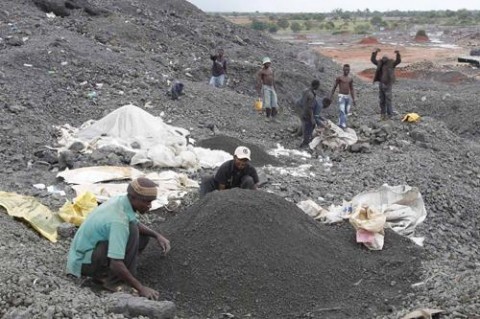
On Zambia's Copperbelt, copper runs in the veins of every town, overshadowed by the Black Mountains - towering slag dumps that look like slumbering beasts. Their rugged slopes tell tales of both prosperity and ruin. Theophilus Ngoma, a self-proclaimed small-scale mining magnate, wielded an iron fist, choking the region’s richest resource. His most profitable venture involved purchasing stolen copper cables, cathodes, and ores - basically anything bearing copper’s name - and selling them to eager buyers. Rumors swirled that he didn’t merely buy the loot but masterminded the thefts himself, orchestrating daring heists with ruthless precision especially in storage facilities and from moving trucks.

His enemies spat "Jerabo," a slur for subsistence miners, while his allies hailed him "Commander One." Politicians, depending on their needs, skillfully bestowed titles to coax favours from him. It enterprise was 

There were some rumours that some politicians actually engaged him to do much of their bidding, and some police officers were on his payroll.

No one dared work the copper slag dumps of the Black Mountains without his nod.

Theophilus's tactics, raw violence without any cloaked, kept smaller cooperatives and independent prospectors trembling. Like a mafia don, he enforced his rules with fists and fear, guarding his territory against rivals.

His every decision sent tremors through Kitwe’s markets and the lives tethered to them. Theophilus was a menace because of his full awareness that everyone feared him. He would even park his vehicle on the middle of the road whenever he felt like it. 

Yet, after the government changed in August 2021, Theophilus grew eerily quiet. His company’s pace slowed, and whispers hinted he was chasing ventures across the border in the DRC. 

This is because, in 2018, the government had ceded a 10% stake in the Black Mountain, once held by ZCCM-IH, to Jerabos. They called it youth empowerment and claimed that this decision had an opportunity to employ many youths who already relied on the slug. However, it mainly fortified men like Theophilus, legitimizing what was once illegal.

Since this was viewed as a politically motivated move, there was uncertainty when the political party in government changed.

Enter Lloyd Mukuka, a skilled but stubborn prospector who felt the shift as opportunity. Wherever he has worked, he traced the mine’s layout in a battered notebook, a habit learned from his father. 

His small crew had scratched out a living on modest claims, but rumours of a rich vein in the Chingola slag heaps ignited his pugilistic ambition. At their cramped home, his wife, Julia, clutched his arm, her eyes wet with dread. 

Theophilus Ngoma’s silence isn’t retreat, Lloyd,” she warned, her voice low. “My cousin crossed him years ago. They found him murdered in a ditch. This is a trap. The perpetrators have never been caught, but there's no doubt who was responsible."

Lloyd set the ore down, his hands unsteady. “This vein could free us, Julia. Lesa tapela, atambika fye.”

Lloyd, fueled by a new drilling technique and memories of his father’s lost claims to Theophilus' empire, shook her off.

“This vein could change everything for us,” he said, his voice firm but his hands trembling. “Theophilus is distracted. I won’t let fear steal our future. My father lost everything due to fear of taking chances. I won’t let fear steal our chance.”

She shook her head in disagreement, her braid casting a show on the wall. “It’s not fear. It's survival. It is praiseworthy to be brave and fearless, but sometimes it is better to be a coward.”

Ignoring Julia’s pleas, he led his crew to a contested edge of Chingola, near Chililabombwe, where the Black Mountain’s shadow stretched long. Kunda Mapushi, a junior geologist from the Ministry of Mines and Mineral Development, had tipped him off about the vein. Lloyd had met Kunda at a mining meeting, where the young man’s sharp mind was overshadowed by his bitterness of wanting to have a share of Theophilus's cake.

Days into drilling, the air thick with dust and the whine of machinery, Lloyd noticed signs of trouble: a slashed tire on their truck, footprints near the rig at dawn. He brushed them off, focusing on the glint of ore in his samples. His crew worked fast, their drills unearthing traces of the vein he had dreamed of. But at dusk, engines rumbled beyond the ridge. A black Toyota Landcruiser idled, its tinted windows glinting like a predator’s eyes.

Theophilus emerged, flanked by a security detail, their rifles catching the fading light. His polished military-styled boots crunched the slag, camouflaging with the black dust-covered surroundings. Among them stood Chilufya, a former employee Lloyd had fired for skimming funds. Betrayal hung heavy in the air.

“Ba Mukuka,” Theophilus said, his voice smooth but sharp, “you’re digging in my mountain. You thought I wouldn't know? You are too young and too dumb if you think you can steal from me.”

Lloyd squared his shoulders, sweat beading his brow. He uttered the f-word twice, once sotto voce and once quite loudly and clearly.

“This is my find, Commander.”

Theophilus stepped closer, his presence heavy as the slag around them. “Join my operation, and I’ll let you keep a sliver. Refuse, and you’ll lose more than dirt.”

A spanner clattered as one of Theophilus’s men shifted, a warning. Lloyd’s heart pounded, Julia’s words echoing: It’s a trap. He glanced at Chilufya, whose smirk confirmed the betrayal.

“Yashani iyi nomba, yama? This claim is mine. I left Kitwe for you,” Lloyd said, his voice steady despite the fear.

Theophilus’s eyes narrowed. “This mountain has buried many of bold people.”

His men surged forward, seizing the rig in a swift, merciless sweep. Lloyd resisted, but a rifle butt struck his temple. He crumpled, and the crew scattered into the dusk. The next morning, Julia searched the site, finding only Lloyd’s broken drill bit, its edge stained with blood. He was never seen again.

Theophilus, unable to integrate Lloyd’s specialized equipment immediately, summoned Kunda Mapushi to his office overlooking President Avenue. The air was thick with cigar smoke. “Oversee this acquisition,” Theophilus ordered. “Ensure a smooth transfer. I’ll reward you when I return from Likasi in the DRC.”

Kunda nodded, but his eyes glinted with mischief. He’d long resented Theophilus and he also felt that his expertise was undervalued at the Ministry. At the Kalulushi site, he spotted small pockets of copper ore, too minor for Ngoma Mining’s sprawl but lucrative for a side deal. Late at night, he loaded a few tons into a truck, his pulse racing as a guard’s flashlight swept the yard. He delivered the ore to a Chinese buyer, pocketing the cash but glancing over his shoulder, half-expecting Theophilus’s enforcers.

When Theophilus returned, he noticed a shortfall in the output reports. His roar shook the office. “I think I have been robbed. Who dared tamper with my acquisitions?” he demanded, pinning Kunda with a stare.

Kunda, quick-witted, replied, “The Chingola deposits were overhyped, Commander. Ask the local prospectors, they’ll tell you the vein was weak.”

Theophilus sent men to The Space Platinum, where miners gathered to mourn Lloyd. An elderly prospector, his face weathered by dust and sun, spoke. “Lloyd was brave but foolish. The copper was small, not worth the risk.”

Kunda, standing beside Theophilus, shrugged smugly. “See? I told you, those pockets were nothing.” Theophilus nodded, but his jaw tightened, a flicker of doubt in his eyes.

Weeks later, a young prospector arrived at the Black Mountain after getting a loan from the CEEC, his tools gleaming with naive ambition. Theophilus’s men watched from a ridge in an idling Ford Ranger. At a community meeting in Wusakile, Julia listened as a politician praised “Black Mountain Youth Empowerment Programme,” promising more stakes for people if they vote for him. The room was silent, people exchanging wary glances. Julia clutched Lloyd’s notebook, its sketches a reminder of dreams crushed under the mountain’s shadow.

Epilogue 

Unbridled power that most Jerabos have, often bolstered by corruption, has crushed many individual ambition and justice. Despite initial appearances of opportunity, challenging an entrenched, Jerabos has led many to ruin. Furthermore, seemingly beneficial moves, like "youth empowerment programmes," can be co-opted to legitimize and strengthen existing illicit power structures, highlighting how easily systems can be manipulated to serve the powerful rather than the people. Supporting locals to effectively participate in mining, government needs to deliberately provide training programs, easy access to equipment and create fair market opportunities tailored to their skills and needs. We should also frame challenges with subsistence miners and Jerabos as opportunities for growth, reinforcing a belief in their ability to succeed with the right resources and in a legal framework. This way we can avoid child labour in mining, unsafe mining methods and actually empower youths.


Sunday, August 4, 2024

Civil Service Woes: The Curious Case of Mulenga Chanda

It was on a cold June day at the bustling offices at Zambia's Cabinet Office, a peculiar figure emerged from the doors. No one really knew who he was or what he was there for but he seemed to know what or who he wanted. After usual formalities, introductions and onboarding, it was learnt that the man who was later known as Mulenga Chanda had just been appointed to Cabinet Office as an Assistant Director-General of the Emoluments Commission. 

Big Mule (as he was fondly called by his peers due to his larger than life personality) or Chanda Beu (named after the late famous dancer in Amayenge Asoza Cultural Ensemble by his foes due to his small stature) used to be a District Education Board Secretary (DEBS) in one of the districts and used to be very vocal against the previous administration. The then ruling political party even labeled him an enemy of the party and pushed him out of the public service when he was retired in public interest. 

Now the retiring of someone in public interest is usually triggered at the pleasure and volition of the President and in the context of Zambia, it is a tool which is susceptible to abuse as politicians use it to punish certain individuals purely for political reasons. Based on this, it is open to speculation whether Mulenga deserved the boot from the civil service or not. Different political spectra have different explanations. 

Mulenga was a typical village staring who walked with a rhythmic bounce in every step and with shoulders high, his nose always in the air and his eyes sparking with self-assurance that can only be rivaled by stars. He exuded an air of confidence that commanded admiration and envy. Real to him and imaginary to those surrounding him. He was brash and full of braggadocio colloquially referred to as the 'Bemba Arrogance'. 

He wore those suits you would get for K500 at salaula joints common on every street corner. Suits that you don’t have to take for professional laundry but could just hand it over to your helper to wash it. The suits also allowed him to carry roasted groundnuts and cassava, his favourite snacks. But it seemed it also had pockets for stationery, coins, a shoe brush and a packet of cigarette with matches. 

As he made his way to the new office which was extemporaneously prepared, Mulenga couldn't resist sharing his thoughts on how he wants things to moving forward with anyone who would listen. He loved to hear the sound of his own voice, and his colleagues would soon learn due to his incessant chatter. Despite his chatter, he colleague often found themselves lost on what he would be talking about, searching for a glimpse of substance amidst the verbal desert.

"A whole desert of nothingness without any oasis of sense," his workmate, Titameni Phiri, would often whisper to others while rolling her eyes in exasperation and resignation. 

Titameni was the self-appointed spokesperson for everyone as she was the only who would object to Mulenga’s outrageous demands. This was due to two possible reasons. Firstly, she was a Chewa and a woman. Chewa women are verbal artists with a reputation of entertaining nothing and taking no prisoners. These original feminists are assertive and sometimes abrasive. 

Secondly, by virtue of her hailing from the eastern part of Zambia, she had diplomatic immunity over Mulenga. She was his tribal cousin. There is a longstanding social reciprocal relationship premised on jokes and power formally described as traditional cousinship in Zambia or Chimbuya. However, this cannot be exercised by anyone. You can't get away with condescending jokes if you are not a tribal cousin. Context and names are the key.

Due to his tendency to speak at length without saying anything of substance, Mulenga’s charm and charisma - as he thought of it - won over less people. His reason for having that new job and know it all attitude made him a divisive figure in the office.

One day, while presenting a critical project to his superiors, Mulenga launched into a lengthy monologue which was laced with threats and accusations. It was woved in a tapestry of words that left everyone bewildered. It had to take Mr. Mwaba, his supervisor, to intervene and gently guided Mulenga back on track and throwing a lifeline to a meeting which was on a precipice of a disaster.

"Mr Chanda, my fellow Alice Lenshina descendant," Mr. Mwaba said with a smile, "hide that wisdom from the many rat-eating easterners in this room. They will steal that wisdom and claim its theirs since they've always claimed that wise people are from the east. For now, let's just on the task at hand.”

Everyone busted out laughing but the message was clear to Mulenga who nodded and stuck to reading the presentation word for word to avoid veering off in a troubling direction. Again. 

At the time of writing, Mulenga isn’t a man to make even little concessions that would eviscerate his opportunity to demonstrate his authority. However, in life, a little bit of nonsense can be a welcome respite in the midst of the chaos. We must forgo validation and status for the greater and collective goal. 

Appointments like Mulenga’s are part of the reason why the public service has been in the doldrums. People like him rarely go to the office to work and contribute to the greater good. Using the same algorithms that were used against them, they are usually on the lookout for opportunities to exert their authority or 'sort out' others, and this usually stretches to frustrate those who may decide to use anything else but political lenses when conceptualizing or analyzing things. 

It can be hard to understand why someone like Mulenga who had been abused and treated so unfairly to the point of even being dismissed from the public service would perpetuate abuse. However, literature has shown that such patterns are familiar and serve as a way to regain a sense of power. Woe to the land whose king was a servant, Ecclesiastes 10 v. 16 warns. 

Secondly, toxicity, inefficiencies and corruption are usually brewed by individuals like Mulenga who get positions on patronage. Another debate can be held on whether Mulenga is qualified to hold such a senior position as Assistant Director General without any prior experience in the similar environment. Then wouldn’t Mulenga go out hunting for everyone who he thinks may have contributed to his earlier career demise? But again, what is the best way of righting the wrongs that were done to Mulenga through politics? 

Clearly, political or discretionary appointments do not lead to the selection of meritocratic qualified appointees since politics values loyalty more than expertise. The feeling of entitlement by the appointees also harms the integrity, efficiency, and effectiveness of the public services. Mulenga is both cause and effect of a flawed system of governance in Zambia, a microcosm of deep rooted problems.

Tuesday, March 21, 2023

Prey, What Did I Inherit?

Verily, you might surmise that I am much akin to a moose in my capacity to imbibe alcohol on the most frequent occasions. In my past life, I must have been a Drosophila Melanogaster. A common fruit fly. I am unable to remain sober, for I dread what I might encounter. I perceive and hear things in the absence of alcohol flowing through my veins. I feel that when I am drank, I can chat with whatever haunts me without any mask of fear. Maybe it is because in vino veritas

Over a decade ago, news arrived that a distant uncle, whom I had met just once in my childhood, had bequeathed his entire estate to me in his testament. I was astounded and bewildered. Why would he leave his property to me, a stranger?

Even the person who delivered the news to me could not conceal their surprise, no matter how hard they tried. The news was accompanied by the keys to the house.

At first, I found it hard to believe.

Upon learning more about my uncle, I discovered that he had a strained relationship with everyone, including his offspring. Perhaps he had elected to bestow his property upon me because he believed that I was the only one who would cherish it.

I set off to visit the house, embarking on a long journey that spanned the majority of the morning. As I crossed the threshold of the aged house, a strange feeling began to nag at me. The cracked floors groaned under my feet, and the scent of mold and mildew filled the air. It was evident that the house had been deserted for quite some time.

However, I had not come to admire the architecture or the dilapidated state of the building. I was there for an entirely different reason. I had no notion as to why my uncle had chosen to leave me this decaying old place, but I knew that it had held great significance for him.

As I traversed the empty rooms, memories of my childhood flooded my mind. I recollected the one time when my mother and I had come to visit my uncle, spending long afternoons in the garden, gathering mangoes, and chatting about everything and nothing. It had been a joyous period, a time before disputes within their family had driven a wedge between them.

But as I continued to explore the house, a strange sensation interrupted my reminiscences. It was as though something – or someone – was watching me, lurking just out of view. I endeavored to brush it off, attributing it to my imagination running wild. Nevertheless, the feeling persisted, growing stronger with each passing moment.

Suddenly, I heard a noise emanating from the room at the far end of the hallway. It sounded like footsteps, slow and measured, as though someone wished to remain unseen and unheard. My heartbeat quickened as I made my way towards the room, attempting to be as noiseless as possible. Upon reaching the far end of the hallway, I noticed that one of the doors was slightly ajar. It was the room that – by my inferences – had once being the bedroom of my uncle.

I nudged the door open and peered inside, half-expecting to see someone standing there. However, the room was vacant, and I breathed a sigh of relief. That was when I discerned something peculiar about the room. It was immaculately clean, as though someone had recently been in there. But that was impossible - the house had been abandoned for years.

I resolved to investigate further and commenced a diligent search through the scattered boxes which filled the room. Alas, most of these were filled with mere trifles - old magazines, broken toys, and other such worthless odds and ends. However, a certain box soon caught my attention. It contained letters, aged photographs, and various personal articles belonging to my uncle.

As I delved into the contents of the box, a certain sentimentality began to stir within me. There were letters from my estranged father, who had left when I was but a child. There were photographs of my uncle and I, taken during the innocent years of my youth. And there was a diary, filled with my uncle's reflections and emotions from the last years of his life.

As I read through the diary with a growing sense of unease, I found myself increasingly disturbed. My uncle's words were fraught with pain and sorrow, and it was evident that he had been contending with some insurmountable difficulty for an extended period. He spoke of feeling as though he was under constant surveillance, of hearing peculiar noises within the confines of the house. And then, as the entries drew towards their conclusion, he made mention of a dark presence which dogged his every step.

My mind reeled in disbelief. My uncle had been assailed by an ominous force within these walls, a force which had driven him to the brink of madness. And now, to my horror, it appeared that this same malevolent presence had shifted its focus onto me.

As I closed the diary and surveyed the room, a shiver passed through me. The sensation of being observed had intensified, and it seemed as though an entity was standing close behind me. Slowly, I turned to face the intruder, dreading what I might behold. A figure materialized in the doorway, murky and elusive, moving with a slow, deliberate gait in my direction. Paralyzed, I could not speak nor move as it drew ever closer, its eyes hollow and black, its flesh ashen and gaunt.

As the skeletal hand reached forth to touch me, I realized with abject terror that this was the same loathsome presence which had tormented my uncle. It had been waiting, biding its time in the shadows, for the moment when it could seize me. And now, I was trapped within its grasp.

I made a valiant effort to flee, but my legs refused to respond. My voice was silenced by a constriction in my throat. The dark figure loomed over me, its foul breath searing my face. And then, in a sudden flurry of motion, it lunged at me, dragging me towards the inky depths of the shadows.

I fought back with every fiber of my being.

The figure began to withdraw, retreating at first with sluggishness, but soon accelerating with an unnatural quickness, as if it were a marionette being manipulated by some unseen puppeteer. I longed to scream, yet my vocal chords remained strained and unyielding.

The creature was nearly upon me when a gust of wind rushed through the room, and the space was shrouded in darkness. I stumbled backwards, tripping over some unseen obstacle and plummeting to the ground. When I regained my bearings, the figure had vanished, leaving the room in the same state of emptiness as before.

With my nerves shattered and my heart pounding, I clambered to my feet and fled the house as quickly as I could. As I reached the safety of my vehicle, I turned back for one final glance at the accursed dwelling.

From that day onwards, I dread a teetotal lifestyle. Whenever, I haven’t taken in alcohol, there is a constant looming over me a malevolent entity which forever haunt my moments.

Tuesday, October 11, 2022

The Dream Of A Journalist

My name is Mulenga Chanda. I was born in Nkana East, Kitwe, in the 1970s and I am a journalist. A freelancer. As a child, I wanted to be a lot of things and a journalist wasn’t one of them. My parents made sure that my brothers and I went to the best schools and provided us with everything a child would need and want. In retrospect, my parents’ success was my curse. As a partaker of my parents’ wealth, why did they want me to get educated? Don't people go to school to amass wealth in future? Now why should those who are already rich get educated? But little did I know that wisdom and knowledge cannot be inherited. I was only a child sowing, and now 30 years later, I'm reaping. The law of seedtime and harvest is cruel. Very cruel indeed. Well, as expected I failed to make it into grade eight, but father's influence secured me a place at one of the high-end secondary school. This secondary school was where the crème de la crème, the best of the best minds went for secondary education. Another group of children found there was of those with parents who could afford the school’s invoice.

I was chased from there, for what the authorities called ‘bad behavior’. I was caught smoking. Is smoking that that bad to deserve a dismissal from school? And no, it wasn’t nicotine. In my effort to be absolved, I told them it was for medical reasons. It was a shot in the dark.

Nonetheless, I finished school through push and pull and hey presto I even managed to do journalism at some of those colleges, where today it’s a college and tomorrow it’s a house. My college was even without any proper mailing address. It was care of some individual, The Principal. His name is on the tip of my tongue, maybe I will remember it later.

I did journalism because I wanted to be famous. Journalists are famous right? They are always in the media with their stories, especially political scandals. Those journalists are famous. Everyone knows them. I wanted to be famous. I was going to be this journalist, I decided.

I would relentlessly narrate to my girlfriend how proud and eventually famous she will be when her man becomes one of the most famous journalists. And she entertained my hallucinations. I bet that is what lovers do, cheering on their partners to dream.

That was a long time ago. I am now thirty. I am now a journalist. But not what I imagined I will be. No. the prefix freelance was what I was using to hide the fact that I was a latent failure and bad with the job. Media houses also exploited me every time I was selling a story to them. Damn capitalists. I had no choice but to accept that exploitation was part of my condition of service. At least the peanuts they were giving me could pay my two roomed servants quarter I was renting in Kalingalinga and buy me the necessities I need to survive the hustles and bustles of the Lusaka life.

It’s true, life is a grindstone, and it was grinding me down.

Since I could not afford to drink from expensive places, I patronize cheap and stinky drinking spots. My favorite was one place called Die Hard Tavern in Kalingalinga. Its owner must have been a Bruce Willis fan. This place’s smell was a mixture of Chibuku, sweat, urine and some smells that one cannot really put a finger on. Patrons could just urinate from the tavern’s wall.

I bought and got drunk on Chibuku. Just added some milk, and it went down well. On my way home, I would buy one bottle of Mosi or Castle lagers to show off to my landlord that I was doing well in my job. Even a struggling man must have some self respect. Very important!

I haven’t had any story to sell to these media capitalists for two weeks now. Am I losing my touch? How am I going to pay my house rentals? It was 08:00hrs on the clock but I was already at the watering hole galloping from the Chibuku that I bought. Then I remembered that I had a K1 coin in my pocket, allowed my hand to dive in there and fish it out.  I then walked to the Juke Box, throw in the coin and pressed the number for House of The Rising Sun by The Animals. As I walked back, I overheard one of the bar patrons telling a friend that a burglar was shot at his neighbor’s house in the wee hours as he tried to enter through the window.

I got interested, dragged my chair there and listened to this man, who we all called Long Spanner, narrating the story. Long Spanner is obviously a tall glass of water and walks like he has all the problems of the world on his shoulders. Whenever he is just standing, he looks like a tree resisting being blown over by a wind gust. He is the best motor vehicle mechanic in the neighborhood, though. Grapevine has it that he always has a spanner in his deep pockets. What a guy!

I got my note book and wrote down some few information from this story. I learnt that the man who got shot was currently admitted at Levy Mwanawasa General Hospital.

This was my break.

Before Long Spanner could even finish his story, I absquatulated and decided to go straight to Mwanawasa General Hospital to look for this story. I took out my cellphone and called Peter, a taxi driver. Peter is a highly skilled driver; someone you need to call if you want to be early for a meeting starting at 11:00hrs even when its already quarter past that time. In life, always contacts for people that are best in their respective fields.

Now, I helped Peter find his job and hence he felt indebted to me and he had himself the responsibility of driving me home from drinking spree whenever needed.

When he arrived for my pickup, he was with a female passenger.

‘Boss this passenger is going to Chelstone,’ shouted Peter as he winked at me whatever he meant this time around because in behaviour, Peter is more slippery than an eel.

Throughout the shot trip to Levy, I kept on thinking how this would be my breakthrough story. My rentals cheque. I wanted to be the one capture. I wanted it so bad. And wanted to the first journalist. You know, journalism is a cutthroat job, you need to be the first one to report a story if you want to reap the full rewards. The whole universe has just conspired to help me. 

At Levy, I hatched a plan on how to avoid the Police and the medical staff and get hold of the burglar. Get the story from the Balaam donkey's month. I was meticulous in my scheme. I need to look for a white lab coat and pretend that I am one of the medical team...............

Suddenly, I started hearing a familiar sound. It was the alarm. It woke me up with the sound of my favorite music. 

Phew, what a dream that was?  I have never even tasted alcohol in my entire life. Maybe I need a totem to test my own reality. 

"What is real. How do you define real? If you're talking about what you can feel, what you can smell, what you can taste and see, then real is simply electrical signals interpreted by your brain." - Morpheus (The Matrix)


Monday, September 26, 2022

A DAY IN THE LIFE OF A RURAL WOMAN

She wakes up as early as 4am to light a fire for warming water. She will then warm the leftover food before proceeding to wake up the kids and prepare them for school with the water that she warmed. This is evocative of her plans of making her children get an education. She has made it her objectives that her children should not grow up the same way like her and her husband. Neither of the two parents can read nor write.

By 6am, she’s done with the kids and ensures that they leave for school. Without any pause, she reminds everyone still remaining at the house that it’s time to head for the fields. She understands that this is important for the family sustenance. To have food is to have security. She’s been taught that a food secure home is respectable home. Much as she ascribes great importance to food security, at the back of her mind there’s income security. And as such she also grows cash crops like tobacco and cotton beside food crops. The cash crops will enable her sort out financial challenges like school prerequisites and other household needs.

By 1pm, she - with everyone else - are knocking off from the field. Unlike everyone else, however, she’s carrying a bundle of firewood on the head plus some vegetables in the hands, the inputs for meals to be prepared.

When they reach home, she makes a fire whilst simultaneously cleaning some cooking utensils.

“I will start with nsima since chibwabwa doesn’t take much time to prepare” she thought to herself.

As all this transpires, the husbands has dragged a reed mat under a nearby mango tree and is trying to rest but hunger drags him into a siesta. The children occupy themselves with a sport conveniently called ‘game’. It is some form of dodgeball, only that here one ball is used. They do this with one eye intently watching the happenings in the 'kitchen'.

45 minutes into her chores, food is ready. Without any call but with the meticulousness of a space shuttle, the children swiftly whirl around the two plates, one for nsima and the other for chiwawa ya sholo (pumpkin leaves boiled without cooking oil). Everyone else is eating from this ‘table’ apart from the husband who, in synchronicity with children actions, has already prepared himself for this sacred infill from the very same reed mat he's been on since the return from the field. Though tradition dictates that he eats alone, some days she joins him. But today is not such a day, however.

After seeing to it that everyone has had their share, she instructs her oldest daughter to remove the plates, wash them and do any other chore which is on the lesson timetable on this informal education curriculum. This is how she learnt herself and consequently it’s her duty to pass on that education to her daughters. By this time the husband is already leaving for some social gatherings which mainly involve drinking involo, kachasu, wine, katate and other local brew that is in the community at that particular time.

However, her and her smallest baby on her back heads off to the field again to cover some extra land on what was left in the morning session. She will be knocking off nearly 5pm with a firewood bundle on her head and for a change she may be carrying ndelemwa (wild okra) in her hands for supper. This time around her daughter has fetched water and made a fire already. Her duty now is to cook and ensure that the kids and the husband eat.

The husband will be back past 7pm and he should find food ready, regardless of whether he left resources for that food or not. He should also find his water for bathing warmed. This is done irrespective of whether he will use that water for the intended purpose or not. The absence of such expectations can cause physical or verbal abuse from the husband. Anyway, she was taught to guarantee that her husband will always find that these things are in order.

Cursed be the patriarchy and hierarchy.

She’ll narrate folk tales to kids, some are funny and some are scary but all have a teaching, a moral which the listeners are supposed to explore and discover for themselves. She uses anthropomorphism to give human personalities to her animal characters. A majority of these tales have a hare as protagonist or antagonist. She will be sleeping past 9pm.

The following day is just a repeat of this ritual with just minor changes depending on the season on the calendar. For her, as dictated by society, this is her immutable contribution to this family for the reminder of her lifetime. And thus, this is a day in the life of a rural woman.

Moral
Women - who are the majority who significantly have unpaid work responsibilities - suffer from time poverty that negatively impact their well-being and increase their chances of becoming or staying financially poor. Since unpaid labor outside of the market is often not included in most large-scale survey datasets, time poverty is seldom acknowledged in policy and practice. However, time poverty and income poverty reinforce each other; they can drain energy and hinder effective decision-making, thereby sustaining the cycle of poverty. This is why there are more women who are poor than men, the phenomenon called "feminization of poverty."