Saturday, November 18, 2023

World Toilet Day 2023: Accelerating Change

As Zambia joins the world in observing World Toilet Day on 19th November, the focus this year resonates deeply within our nation's landscape - Accelerating Change. Amidst the bustling strides towards progress and development, this day serves as a stark reminder of the critical necessity for improved sanitation practices and facilities across our communities.

In 2015, Zambia joined the rest of the world in committing to Sustainable Development Goal 6 that seeks to achieve access to adequate and equitable toilets and hygiene for all and to end open defecation by 2030. 3 years later, Zambia affirmed this commitment by launching the Open Defecation Free Strategy 2030, the Rural Sanitation Framework for Provision and Regulation and the Urban Onsite Sanitation and Faecal Sludge Management Framework for Provision and Regulation to actualize the country’s sanitation and hygiene development aspirations. The strategies forms part of the government’s National Development Plan and the Vision 2030.

While the Zambian government and its partners acknowledge the profound benefits of sanitation as a prime investment for reducing child morbidity and mortality, enhancing children's cognitive abilities, curbing undernutrition and stunting, and addressing several neglected tropical diseases, along with mitigating risks, anxiety, and psychosocial stress, as well as fostering economic gains, a significant proportion of the population remains deprived of adequate sanitation services. This substantial gap results in a notable segment of the populace lacking safely managed sanitation, thereby amplifying health risks and contributing to environmental degradation. Hence, sanitation stands not only as a fundamental necessity for human health and dignity but also as a critical element for the country's overall development.

With less than seven years to 2030, the scale of the challenge is still enormous, and the pace of change needs to be accelerated because millions of Zambians still don’t have access to toilets and a bigger number don’t have access to basic sanitation service. It is said that we need to work, on average, five times faster and harder to meet the sanitation target of SDG 6 by 2030.

Rapid urbanization and climate change have exacerbated Zambia's sanitation crisis, thus calls for accelerated change.

To accelerate change, individuals’ actions, small yet impactful steps like waste management, support for sanitation initiatives, and advocating for sustainable choices in daily life collectively contribute to the larger goal of improved sanitation access for all Zambians. The UN Water is using an ancient tale of the hummingbird who does what she can to fight a great fire by carrying droplets of water in her beak. The story conveys the idea that each of us can take actions – however small – to help solve a big problem.

To accelerate change, the sanitation crisis in Zambia requires tailored approaches that consider the needs of different groups, including women, girls, vulnerable, marginalized, and rural communities. Innovative, cheap, and quality sanitation solutions, such as community-led total sanitation and investment in sustainable sanitation technologies, can play a pivotal role.

Whilst it has Community-Led Total Sanitation (CLTS) has been successful in increasing demand and access to sanitation in rural areas, there’s need to employ strategies to maintain sanitation gains and instill lasting hygiene habits. To accelerate change, research is crucial to pinpoint the most impactful messages capable of generating interest in sanitation and guaranteeing sustainability of new hygiene practices. Effective monitoring that breaks down data is essential to create evidence that guides planning and resource allocation, ensuring inclusivity and leaving no one behind when implementing interventions.

To accelerate change, the commercial utility companies must be supported by government through funding to enhance infrastructure development, bolster financial practices with transparent systems, improve governance structures, improve sanitation service delivery, implement efficient asset management, provide staff training, foster collaborations, and embrace innovative technology. This will empower the CUs to transform challenges into catalysts for enhancing service delivery and ensuring sustainable water and sanitation provisions for the served communities.

To accelerate change and ensure progress, collaboration between governments and the private sector is crucial to improve investment in infrastructure and technologies that improve access to clean sanitation facilities and promote efficient sanitation practices.

To accelerate change, the United States Agency for International Development (USAID) Zambia supports the Scaling Up Nutrition Technical Assistant (SUN TA) to increase access to basic sanitation and reducing exposure to environmental pathogens that cause increased risk of diarrheal diseases and intestinal infections. Collaborating closely with the Ministry of Local Government and Rural Development (MLGRD), Ministry of Health (MoH), and Ministry of Water Development and Sanitation (MWDS), SUN TA has significantly enhanced sanitation and hygiene accessibility within households and communities in 13 districts: Mumbwa, Chibombo, Kabwe, Kapiri Mposhi, Ndola, Kitwe, Samfya, Mansa, Nchelenge, Kaputa, Luwingu, Kasama and Mbala. This concerted effort has led to the certification of five chiefdoms as Open Defecation Free (ODF): Kaputa and Mukupa Katandula in Kaputa, Tungati and Shimumbi in Luwingu, and Nkole Mfumu in Kasama. Additionally, at the time of writing, the certification process for Moono Chiefdom in Mumbwa was underway, marking a substantial progress towards achieving ODF status in the sixth chiefdom.


Thursday, October 26, 2023

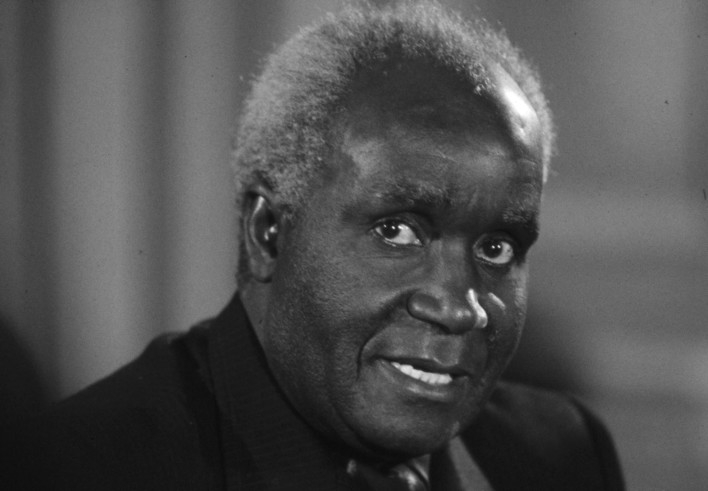
TODAY IN ZAMBIAN HISTORY: THE 1980 COUP ATTEMPT

On October 27, 1980, both Zambians and the world were jolted when President Kenneth Kaunda made a startling announcement during a press briefing at State House. He revealed that on October 16, security forces had successfully thwarted an attempted coup d'état. According to his claims, this coup was allegedly sponsored by the South African Apartheid government and was originally planned for October 17. However, the intelligence services of the United States, the United Kingdom, and France dismissed the notion of South African government involvement, though individual operatives were not ruled out. This raised questions of plausible deniability.


In this covert operation, a small group of Zambian professionals and Congolese dissidents had conspired to overthrow the increasingly unpopular President Kaunda. Miles Larmer identified the key figures within this diverse group of conspirators. Among them were Valentine Musakanya, a former governor of the Bank of Zambia and a prominent businessman who clandestinely financed the United Progressive Party (UPP), an offshoot of UNIP that posed a significant threat to the ruling party until its ban in 1972. Another leader was Pierce Annfield, a white lawyer who had previously defended several opponents of UNIP, including Alice Lenshina and Simon Kapwepwe. Deogratias Symba, a Katangese militia leader, and Edward Shamwana, a lawyer and associate of Musakanya, were also part of this group. Additionally, Lt. Gen. Christopher Kabwe, head of the Zambian Air Force and Kaunda's pilot, and Brigadier General Godfrey Miyanda, who was providing military training to a private Congolese militia, were involved. Interestingly, Yoram claimed that Simon Mwansa Kapwepwe, who had passed away on January 20 of the same year, was aware of the plot and gave his blessings, even though he wasn't involved in its planning.

According to Mumba's account, other individuals directly involved included Elias Kaenga who was recruiting Zambian dissidents and Zaireans from Katanga, Col. Mkandawire, Major Macpherson Mbulo, Anderson Mporokoso, Albert Chilambe Chimbalile, Col. Albert Kaniki, Col. Modesto Kankunku, and Thomas Mulewa and Laurent Kabwita. Deogratias Symba's militia had been in Mwinilung'a after being ousted from Katanga by Mobutu Sese Seko and his Western backers. Symba's involvement was aimed at receiving reciprocal support to launch an attack against Mobutu.

Following the leak of details about the impending coup to the authorities, Annfield managed to escape the country. In contrast, his co-conspirators were less fortunate, lacking the necessary connections and ending up in detention. Andrew Sardanis, in his book "Zambia: The First 50 Years," later claimed that Mundia Sikatana, one of the conspirators and Annfield's law partner, acted as a government mole, reporting the plans to his cousin, who held a senior position at State House. Yoram Mumba interestingly attempted to exonerate Sikatana and instead pointed a finger at Andrew, alleging his involvement in the 1980 coup plot, subtly suggesting that he even sold the plan to Kaunda, the man who had provided him with support and room to conduct business.

It was believed that Edward Shamwana, who was on the verge of being appointed Chief Justice of Zambia before the coup was foiled, would have led the subsequent interim government together with Musakanya.

Musakanya and two other alleged conspirators suffered severe torture, an ordeal from which Musakanya never fully recovered. Four of the plotters, including Musakanya, were acquitted in August 1982, partly because evidence extracted during their interrogation was ruled inadmissible due to torture. Seven of the accused, including Shamwana and Symba, were found guilty in January 1983 and sentenced to death. They were subsequently pardoned by Kaunda in 1990.

Charles Mwewa claims that despite their unsettling implications, coups provide an opportunity to understand the motivations of the plotters and give those in power a chance to honestly evaluate the state of the nation. Furthermore, coups offer lessons on pitfalls to avoid and issues that may lead to successful coups since politics often revolves more around perception than reality.

Kaunda would experience two more coup attempts, one in 1989 led by General Christon Tembo and the 'controversial' one in 1990 by Mwamba Luchembe. Kaunda responded with determination to these coup attempts but seemed reluctant to invest time in understanding their underlying causes. These coup attempts foreshadowed the defeat he would face in 1991.

For most of the 1980 coup plotters, this event overshadowed all their prior accomplishments, as they are now primarily remembered for their involvement in the coup. For example, Musakanya had served as Minister of State, Governor of the Bank of Zambia, and Managing Director at IBM. While still the Governor of the Bank of Zambia, he famously criticized the one-party state and the tribal balancing system, claiming that the latter promoted tribal and ethnic-based politics at the expense of good governance. His proposal for a limited term limit for the presidency ultimately led to his dismissal from the Bank of Zambia. Similarly, Shamwana was known as an exceptional litigator and one of the finest legal minds in the country.


My Thoughts!

1.    1.   Zambians have historically demonstrated their commitment to peaceful and democratic processes, notably by the ballot. It is essential to dispel any misconception that they may resort to violence or coup attempts when faced with grievances. Resorting to coups not only undermines the populace's ability to determine their own fate but also establishes a concerning precedent that subsequent generations might find difficult to resist replicating. President Kenneth Kaunda's tenure, while marked by various achievements, constrained citizens' capacity to exercise their democratic rights through the electoral process. The importance of safeguarding democratic principles and respecting the will of the people cannot be overstated in a nation now known for its history of peaceful transitions and commitment to the democratic ideal.

2.    2.   Interestingly, 3 out of 4 coup attempts in Zambia have been in October: 1980, 1988 and 1997. An intriguing pattern associated with the timing of such political upheavals.

3.  3.     Considering this year's Independence Day theme, which emphasizes the acceleration of national development through the equitable distribution of resources, I firmly believe that General Godfrey Miyanda carries a distinct and vital responsibility to thoroughly document his life experiences and insights, creating a comprehensive literary legacy that would prove invaluable for future generations. Such contributions would not only provide profound insights into the events, challenges, and decisions that have shaped his lifetime but also align with the core principles of equitable resource distribution, including knowledge, history, and experiences. In this context, General Miyanda's potential literary works would be a testament to his dedication to our nation and offer clarity on the seemingly contradictions that previous authors have offered on the 1980 attempted coup.


Bibliography  

1.      

1.    Gewald, J. B., Hinfelaar, M. and Macola, G. (2008) One Zambia, Many Histories: Towards a History of Post-colonial Zambia. Netherlands: Brill

2.    Larmer, M. (2010) Chronicles of a Coup Foretold: Valentine Musakanya and the 1980 Coup Attempt in Zambia. The Journal of African History, 51, pp. 391-409

3.    Lermer, M. (ed) (2010) The Musakanya Papers. Lembani Trust: Lusaka

4.    Magande, N.P (2018) The Depth of My Footprints. Atlanta: Maleendo & Co.

5.    Mumba, G.Y. 2012. The 1980 Coup: Tribulations of The One-Party State In Zambia. Lusaka: UNZA Press.

6.    Mwanakatwe, J. (2003) Teacher Politician Lawyer: My Autobiography. Lusaka: Bookworld Publishers

7.    Mwewa, C. (2011) Zambia: Struggles of My People. Lusaka: Maiden Publishing House

8.    Sardanis, A. (2014) Zambia: The First 50 Years. London: Bloomsbury Academic

9.    Scott, G. (2019) Adventure in Zambian Politics: A Story In Black And White. Lynne Rienner: London

10. Zukas, S. (2002) Into Exile and Back. Lusaka: Gadsden Publishers.

Friday, September 15, 2023

Celebrating Toilets.

This article was published in the Zambia Daily Mail in 2021 to commemorate the World Toilet Day.


On 9th November students from the University of Zambia protested to bring to the attention of government the various challenges the school is facing one of which is the lack of proper sanitation as shown in a video where their Students Union President Gabriel Banda claimed that East Park Mall toilets have been their salvation. 2 days later, on 11th November 2021, students from the Lusaka Business Technical College (LBTC) staged a protest alleging poor sanitation at the institution.

If situations can be this dire at higher learning institutions, how about the rural areas?

The Toilet Crisis

According to JMP (2021), only 3.2 in 10 Zambians have access to improved sanitation facilities which are not shared with other households. 1.1 in 10 Zambian disposes human faeces in open spaces as they lack any form of toilet. The true picture is that 1.94 million of rural Zambians have no toilet facility, as compared with 128,694 of urban. While toilet access is generally higher in urban areas as compared to rural, sanitary conditions in urban areas are aggravated by high-density living, inadequate septage and solid waste management, and poor drainage.

Poor sanitation undermines human dignity. Access to safe, hygienic, and private sanitation facilities is one of the strongest indicators of dignity. For many women across the country however, inadequate access is a source of shame, physical discomfort, and insecurity. Cultural norms strictly control behaviour in this area, in many cases requiring that women are not seen defecating – a requirement that forces them to leave home before dawn or after nightfall to maintain privacy. Delaying bodily functions is a major cause of liver infection and acute constipation. The loss of dignity associated with a lack of privacy in toilets helps to explain why women attach more importance than men to sanitary provision (UNDP 2006).

Poor sanitation hurt girls’ education. Young girls, particularly after puberty, are also less likely to attend classes if the school does not have proper toilets. UNICEF estimate that about half the girls in Sub – Saharan Africa who drop out of primary school do so because of poor water and sanitation facilities. That helps explain why improving school sanitation can increase the demand for education among girls. Conversely, inadequate provision can retard progress. Toilets at home, school and at work help women fulfil their potential and play their full role in society, especially during menstruation and pregnancy.

Poor sanitation causes child mortality. Of the 123,355 annual deaths in Zambia, 31,500 (26%) are children under the age of five (GBDx). Of these fatalities, 3,754 children won't survive to their 5th birthday because of diarrhea. These sickness episodes represent the second largest cause of childhood death after acute respiratory tract infection. Globally, diarrhoea kills more people than tuberculosis or malaria – five times as many children die of diarrhoea as of HIV/AIDS. Most deaths from diarrhoea are caused by shigella, or bloody diarrhoea. Unlike other forms of diarrhoea, shigella cannot be treated effectively with simple oral rehydration therapies – it requires more costly antibiotics. Even for households that can afford treatment, shigella is a growing threat because it has rapidly developed resistance to antibiotics. The economic impact of poor WASH is also staggering as health is wealth. Despite all this background, less than 1.4% of 2022 Zambia's national budget will go towards Water, Sanitation and Hygiene.

Poor sanitation and undernutrition reinforce each other. When children are undernourished, their resistance to infection is lowered and they are more susceptible to diarrhetic disease and other infections. Where children regularly suffer from diarrhoea, they are also very likely to be malnourished as a result. For infants, particularly those under six months of age, diarrhoea can cause permanent damage to intestinal development, reducing a child's ability to absorb nutrients leading to stunting, both physical and cognitive. And children who are affected by stunting in their early years have lower test scores on cognitive assessments and activity level (Alderman, Hoddinott and Kinsey, 2006). Ultimately, adults who were stunted as children on average earn 22% less than those who weren’t (Anthony Lake, 2012).

Working with line ministries to contribute to stunting reduction in the Zambia, Scaling Up Nutrition Technical Assistance (SUN TA) is a project supported by USAID being implemented in 13 selected districts of Central, Copperbelt, Luapula, and Northern Provinces. To achieve this goal, SUN TA targets women of reproductive age with at least one child under 2 years of age, and/or a pregnant woman. The project’s sanitation demand creation and sustainable social behaviours change is promoted through Community Led Total Sanitation (CLTS) efforts. Given that recent evidence suggesting that poor sanitation is particularly threatening to early life health, efforts to improve sanitary conditions is therefore of urgent relevance.

2021 World Toilet Day

World Toilet Day - a day set worldwide to raise the awareness and inspire action to intensify the construction and use of toilets – falls on 19th November every year. This year’s theme ‘Valuing Toilets” draws attention to the fact that toilets - and the sanitation systems that fund them – are often underfunded, poorly managed, or neglected. This has devastating consequences for health, economics, and the environment, particularly in our poorest and most marginalized communities. The use of toilets is a topic that is usually ignored and shrouded in taboos evidenced by the outrage UNICEF faced in 2018 for supporting the erecting of billboards proclaiming the eradication of open defecation in selected districts. It will take us to rightly focus such disgust and outrage at the man in the mirror for allowing our fellow Zambians to have the indignity of not having a toilet.

This World Toilet Day show us support that you care about toilets by joining the #WorldToiletDay conversation on all social media platforms.